Collage With a Design Logic of Its Own
Apr 7, 2026 · Jack Sheehy
Mark Busch's work sits somewhere between collage and design, and the distinction matters. The approach shifts across pieces, some photographs are cut apart and reassembled, others are left largely intact but interrupted by physical objects like screws, paperclips, tape, hardware. The interventions vary but the logic stays the same: introduce something physical and see what it does to the image.
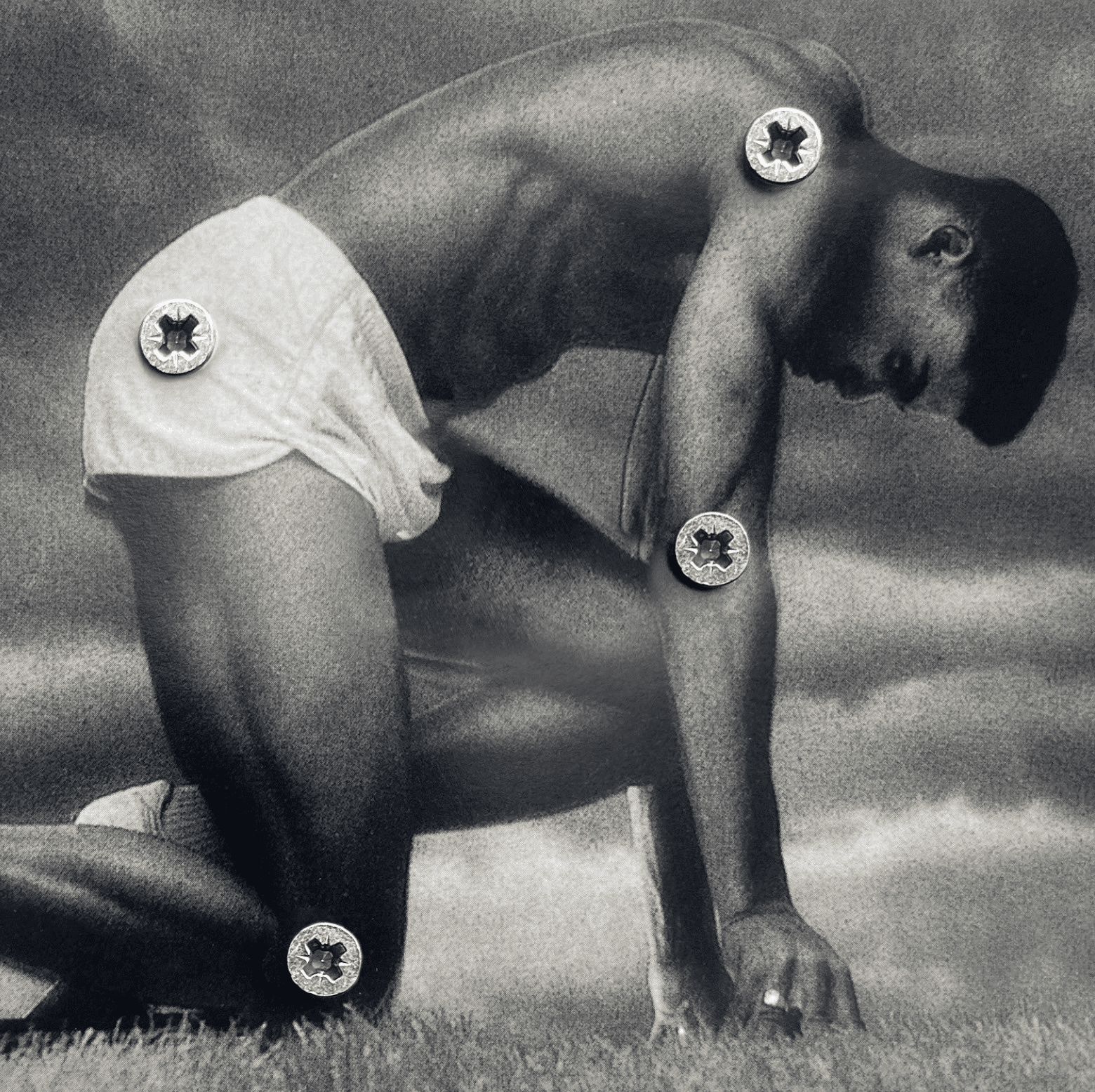
The work still feels whole, just not clean. That got me thinking about how tools don't just enable work but they actually shape it. Digital tools remove a lot of consequence. Useful, obviously, but that freedom creates a certain rhythm that usually ends up polished whether you intended it or not. Physical tools aren't like that. It means deciding when to interfere and living with whatever that produces.
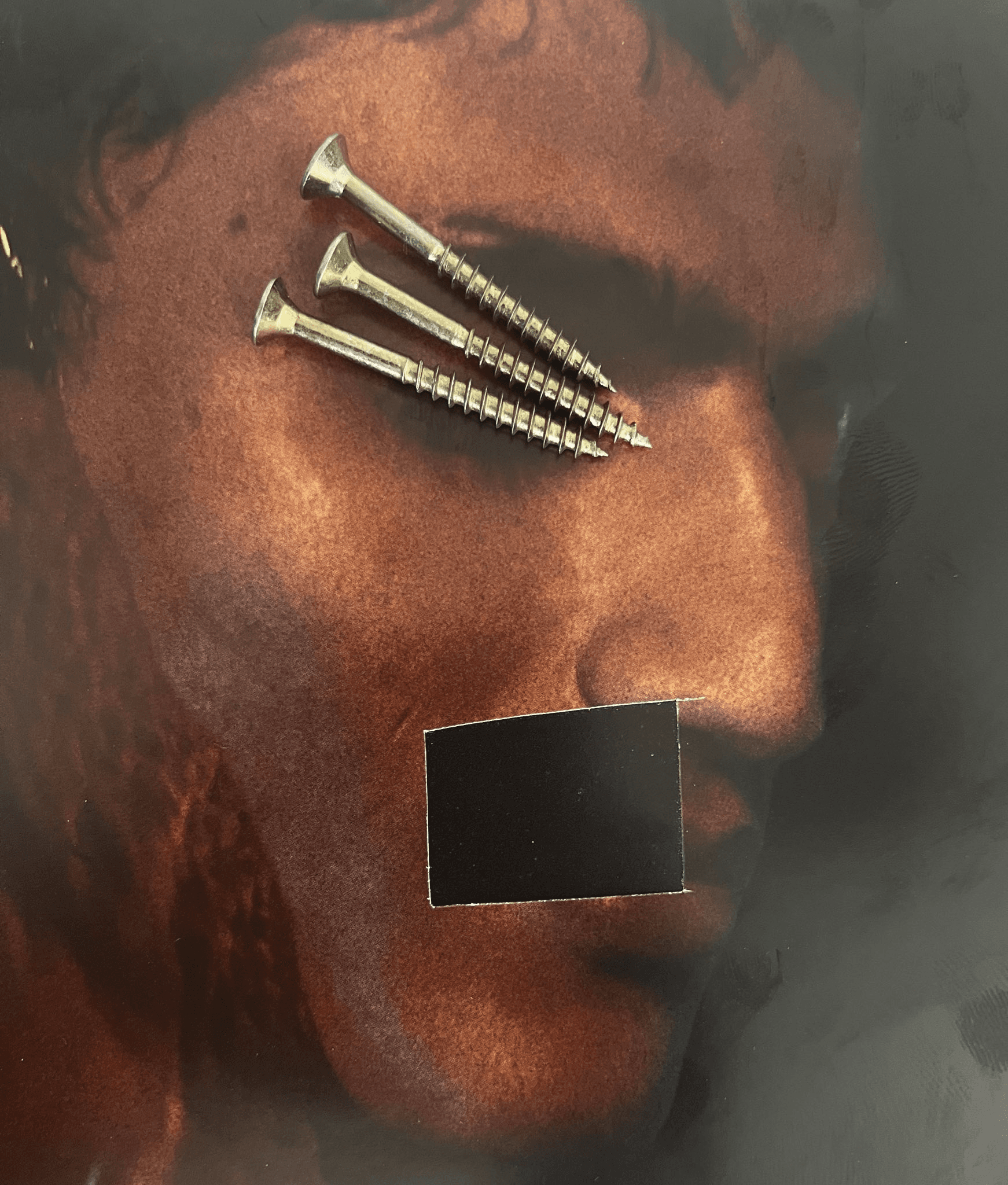
Although the work is described as collage, it's still organised like design. There's always a main idea, often imagery from culture, sport or film. That comes through in how compact the compositions often are. Even when an image is disrupted, it still reads as considered. The logic of layout is still there, just operating through physical means instead of software.
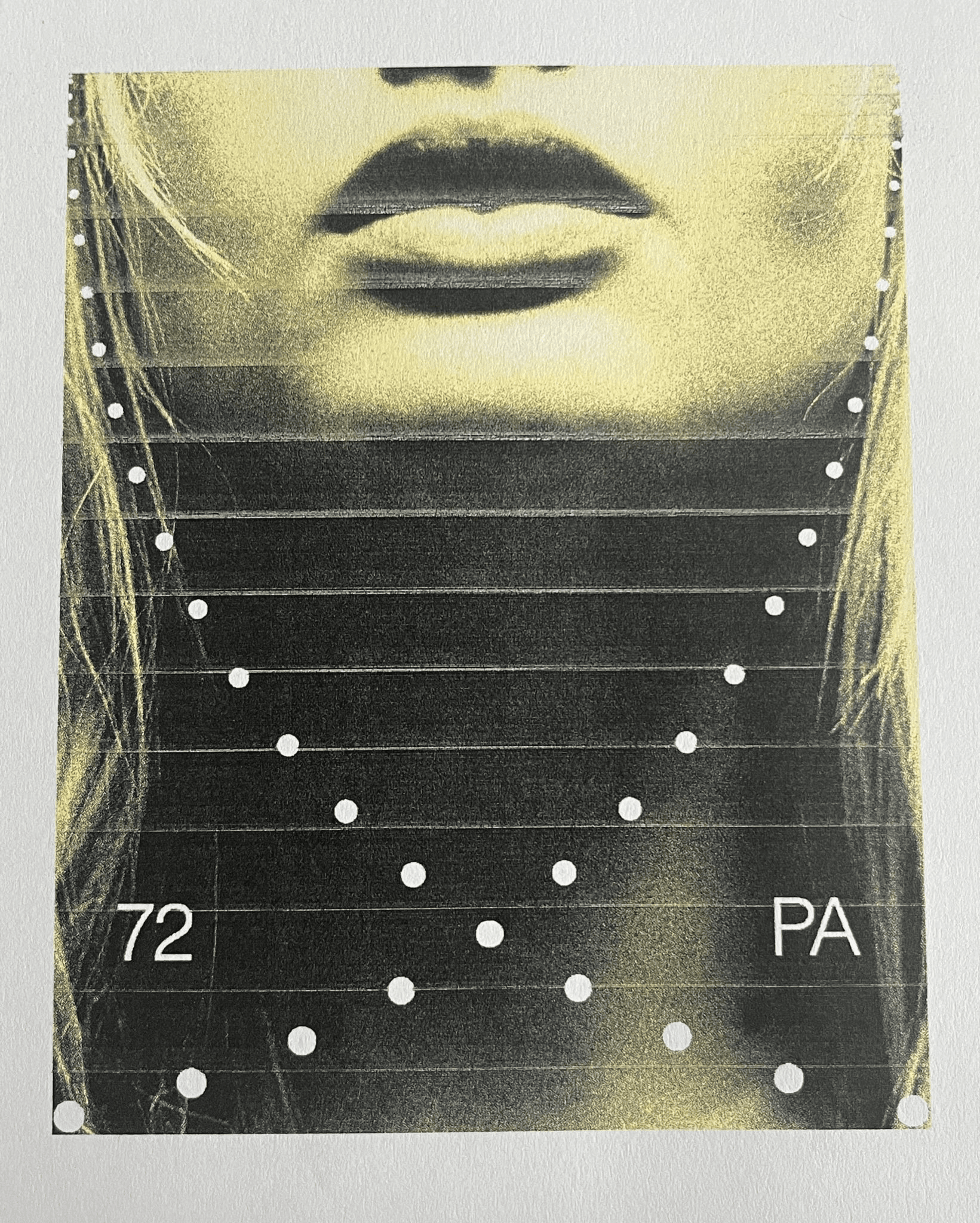
Culture photography appears often, not as a target or narrative but as material. These images are technically strong, carefully constructed, and visually confident. Strong enough to hold up under interference without collapsing, the work doesn't criticise the imagery so much as slow it down.
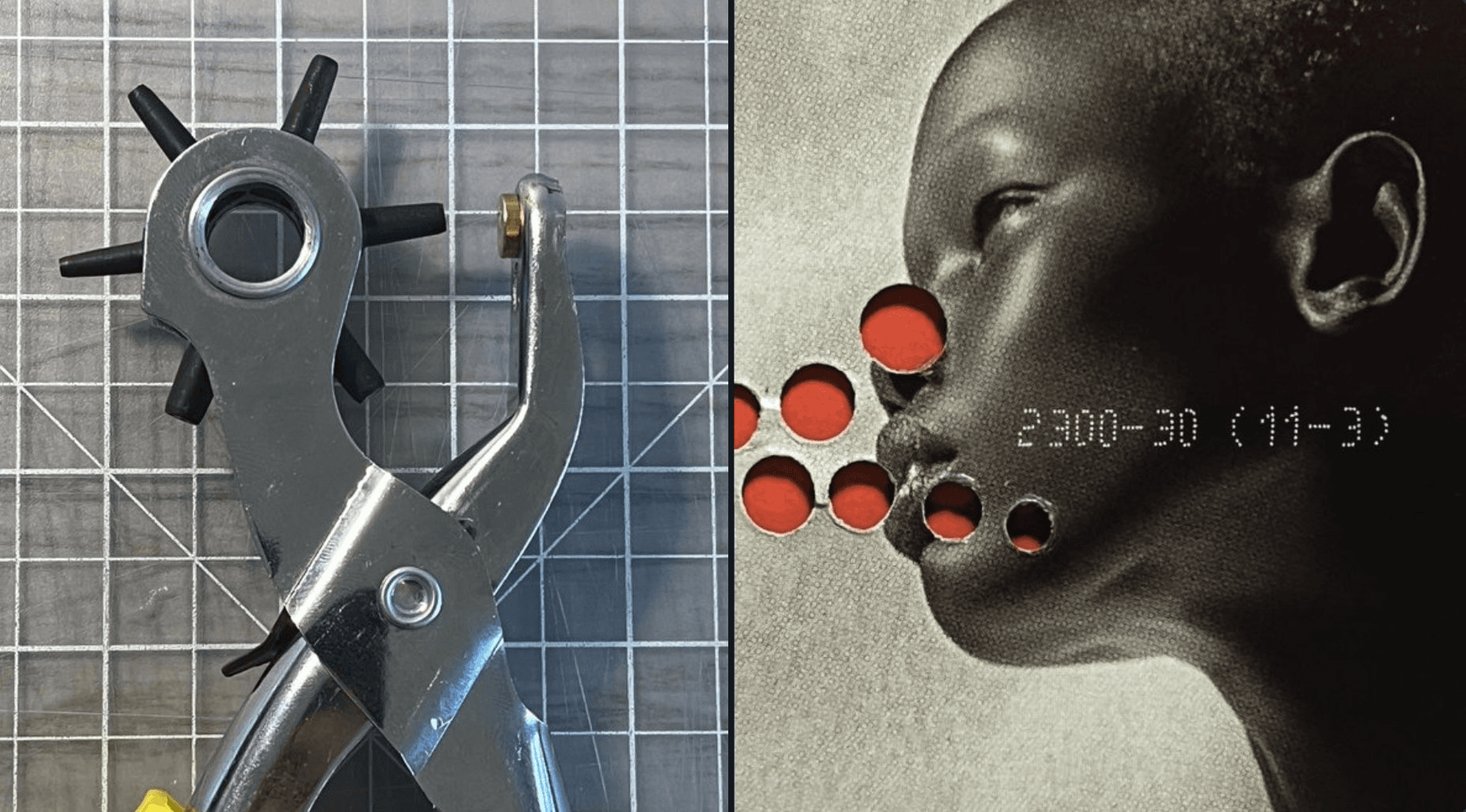
You can see this most clearly in some album cover and vinyl design work for KI/KI. Stripping things back to just composition and photography feels genuinely refreshing. Very little happens in each piece, but the placement is exact. A few millimetres make the difference between an image holding together and falling apart. That sensitivity feels a little foreign to me, coming from digital. In this work it's less about assembling fragments and more about deciding when an image has been interfered with enough.
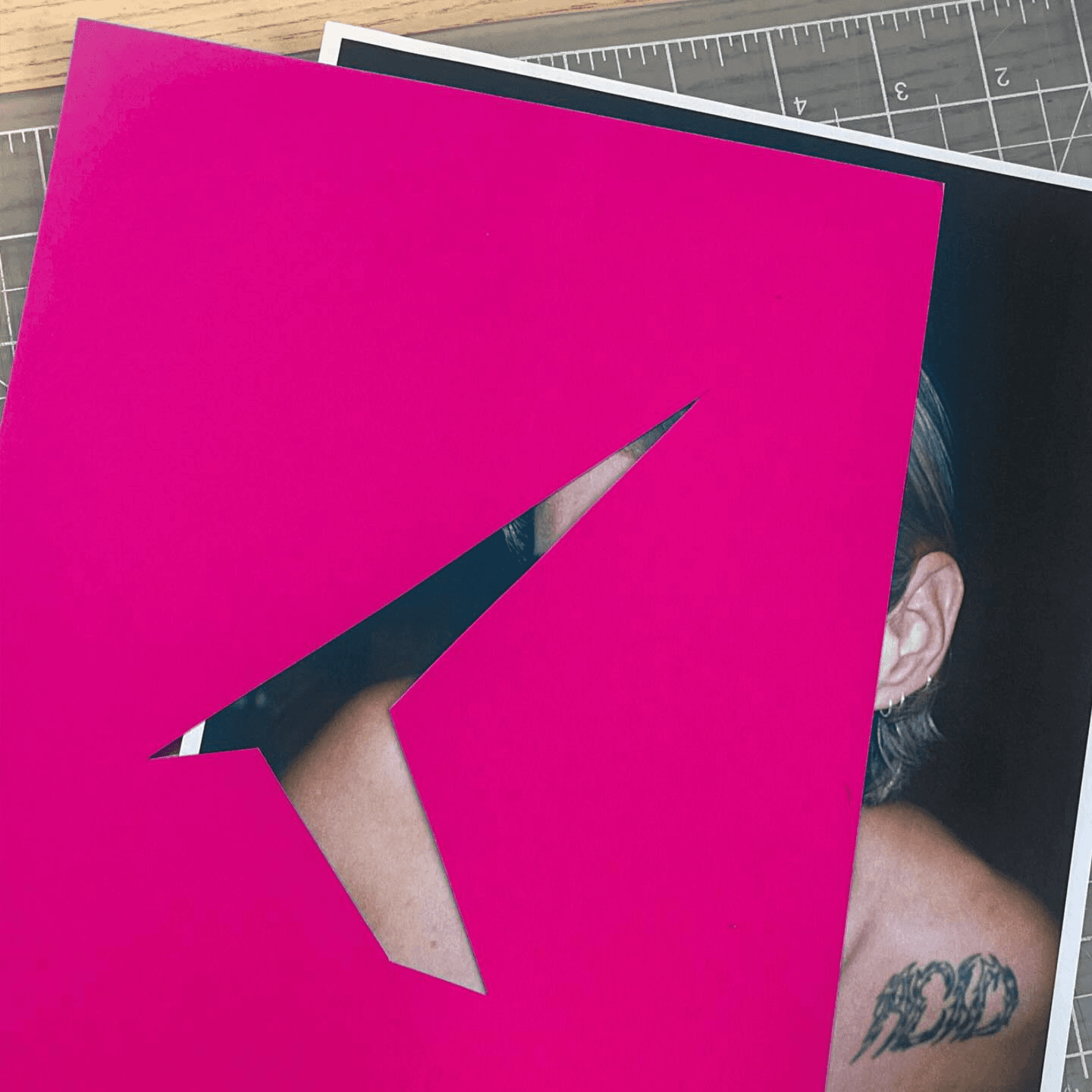
Work by Mark Busch